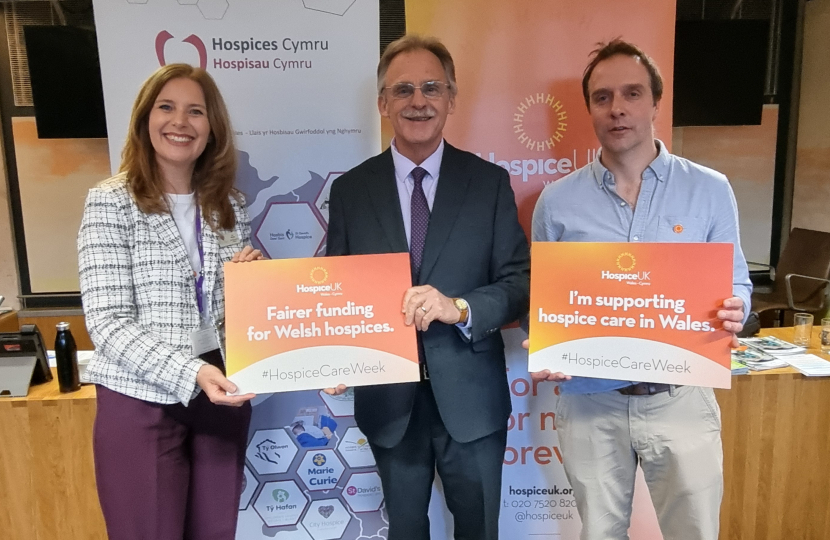
North Wales MS and Chair of the Senedd Cross-Party Group on Hospices and Palliative Care, Mark Isherwood, has warned the Welsh Government that their low levels of Hospice funding in Wales will cost them more and called for urgent sustainable funding for Hospices across Wales.
Speaking in today’s Welsh Conservative Debate on Hospices, Mr Isherwood referred to the “unwavering dedication” the fifteen charitable hospices in Wales provide to more than 20,000 adults and children living with terminal illness each year, but said despite their immense contribution, they have to rely heavily on charitable fundraising, with nearly 70 per cent of hospice care costs met through donations.
He said:
“Wales’ Hospices invest around £30 million of charitable funding into the health and care system each year.
“Looking forward, demand for hospice and palliative care is projected to increase by around 25 per cent over the next 25 years, driven by an ageing population, increasingly complex medical conditions, and widening health inequalities.
“Despite being promised a share of the £3 million allocated in the Welsh Government budget, Wales’s two children’s hospices, Tŷ Hafan and Tŷ Gobaith, were still waiting to receive confirmation of their allocation or when they will receive it in November.
“To meet growing need, they are calling for sustainable, ringfenced funding - rising to 30% by 2030 of care costs, still below the average for adult hospices.”
He added:
“The UK Government has announced additional funding for adults' and children's Hospices in England, dwarfing the Welsh Government's Hospice funding here in Wales, where healthcare is being shifted out of the community into hospitals, in direct contradiction of stated Welsh Government policy.
“Lower spending on Hospice funding in Wales will cost the Welsh Government more.
“By the 2040s, an estimated 37,000 people in Wales will require palliative or end-of-life care annually, with demand rising substantially, yet hospices continue to face serious sustainability challenges, with rising staffing costs imposed through Agenda for Change and National Insurance increases, combined with the rising cost of living, leaving Hospices forecasting deficits for 2025–26.
“As they warned, many are now facing difficult decisions: drawing on reserves, reducing inpatient beds, scaling back services, delaying recruitment, reducing existing services and postponing plans to expand or introduce new services.
“This was illustrated starkly when four satellite inpatient beds at St David’s Hospice in Holyhead closed.
“They told me this was forced on them by rising costs and falling income, despite significant cost-cutting, and that they were now entering an unsustainable position, putting the whole charity at risk.
“Wrexham’s Nightingale House Hospice stated that the current funding model does not secure future Hospice Care, and that Hospices are not being recognised for the work they do.
“The Welsh Government intends to introduce a new commissioning framework by April, arriving too late, at the end of this Senedd term.
“Bangor University research shows that a 14-day Hospice stay costs £5,708 compared with £6,860 for the cheapest hospital-based option, delivering significant public expenditure savings.
“Yet Welsh Government funding averages around 30 per cent of Hospice costs across Wales.
“Although Hospices remain committed to raising charitable funds, this disparity must be addressed if their essential clinical care is to continue.”
Speaking afterwards, Mr Isherwood added:
“Our Hospices need urgent sustainable funding, which is why fully funded Welsh Conservative Government Budgets would invest an additional £40 million into Welsh Hospices and Palliative Care over the next 4-year Senedd term, and meet 50% of the operating costs of Wales’ Children’s Hospices.
“We must ensure that every person in Wales can access the palliative care they need, when they need it, with respect, compassion, and dignity, putting people first.”